Three reasons why a small gasoline tiller can change your gardening life
If you’ve been gardening for a while, you probably know that moment when excitement meets reality. You start with a small patch of soil, a few beds here and there, maybe a tiny herb corner. Then the next year you add tomatoes, peppers, maybe pumpkins. Suddenly the garden that once felt manageable becomes a little too big for comfort. This happened to me. For years, I worked my soil with a shovel and a hand fork, convincing myself that this was “the real way” to garden. It worked fine—until it didn’t.
The breakthrough came the season I finally bought a small gasoline tiller. I’m not talking about a big, loud machine like the ones used on farms. I mean a compact, hobby-sized tiller meant for home gardeners. I used to think they were unnecessary. Now I honestly feel like it was one of the best investments I’ve made for my garden and my back. If you’ve been on the fence or feel guilty even thinking about replacing manual work with a machine, let me tell you the three big reasons why a small gasoline tiller might be exactly what you need.
It saves time and energy when your garden grows bigger than your hands
I want to start with the most obvious one: time and energy. When your garden is small, manual tilling feels okay. It’s a workout, you get fresh air, and you tell yourself you’re connecting with the soil. But once your beds start stretching past a certain point, reality hits: you only have so much time in the day, and turning soil manually becomes a slow, heavy task.
I remember one season when I expanded my garden by just two more beds. Not a huge change, but enough that I suddenly needed almost two full afternoons just to prepare the soil for planting. That meant less time for sowing, less time for seedlings, and definitely less time for enjoying the garden. I would start the season already exhausted.
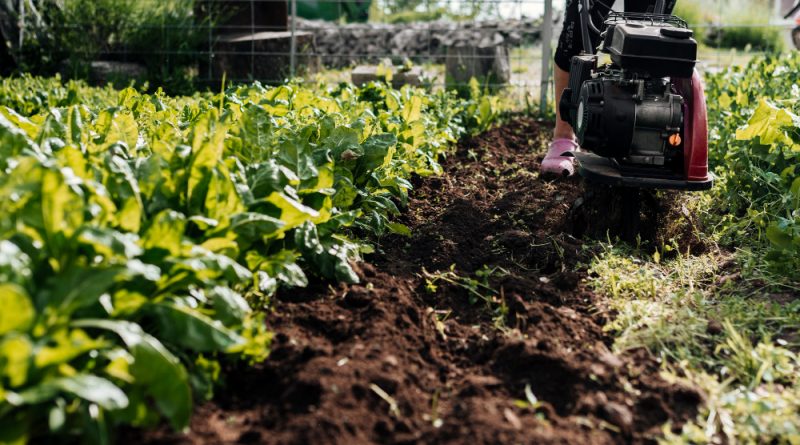
With a small gasoline tiller, those same beds take me maybe fifteen minutes—if I’m going slow. The machine does the heavy part of the work: breaking up compacted soil, mixing in last season’s leftovers, and loosening everything so roots can breathe and expand. Instead of spending hours digging and sweating, I spend minutes guiding the machine gently along the row. After that, the soil looks fluffy and ready for planting.
And it’s not just about saving time; it’s about saving energy for the parts of gardening that actually bring joy. When the exhausting part of soil preparation disappears, you have more room for the fun stuff: planning what you’ll grow, experimenting with new varieties, or simply walking around the garden in peace.
People sometimes feel guilty using machines because it feels like “cheating,” but after switching, I realized something: the goal is to enjoy gardening, not punish yourself. A tiller doesn’t make you any less of a gardener. It simply takes over the tasks that drain your energy the most.
It protects your back and joints in the long run, especially if you garden year after year
When I was younger, I didn’t think much about strain and aches. Digging soil by hand felt like normal exercise. But as time went on, I started noticing the toll. After a full day of manual soil prep, my lower back would feel stiff, my wrists sore, and sometimes I’d skip planting altogether because I was just too tired.
A lot of people underestimate how physically demanding gardening can be. Turning heavy, compacted soil is basically weightlifting. Doing it repeatedly over an entire garden bed? That’s a gym session disguised as a hobby.
Switching to a gasoline tiller changed that. I’m not kidding when I say it felt like a small miracle. Instead of pushing my body to its limits, I just guide the machine. There’s no bending over for hours, no heavy lifting, no pushing awkward angles. I stand upright, hold the handles, and walk slowly. That’s it.
Over time, this makes a huge difference. I stopped finishing garden days feeling like I’d aged ten years. I could spend longer in the garden doing the parts I actually enjoy—harvesting, pruning, planting—without needing to recover from the soil preparation.
Even if you’re young, this matters. One day you’ll be glad you didn’t spend years overworking your joints. And if you’re already feeling the aches and pains that come from long seasons of manual garden work, a tiller is a relief you can feel immediately.
Some people say, “But gardening is supposed to be physical.” Sure, but there’s a difference between healthy movement and repetitive strain that wears you down. A tiller lets you avoid the second one. You still get your steps in, fresh air, and time outdoors—but without the pain that builds up over the years.
It helps you create better soil structure consistently, which leads to stronger plants and better harvests
Good soil is the foundation of a healthy garden. We all know that. But good soil doesn’t happen on its own, especially when you’re working with heavy clay, packed earth, or garden beds that get trampled or neglected during busy months.
This is where a small gasoline tiller becomes more than just a time-saver—it becomes a soil partner.
When I used to till manually, my soil preparation was inconsistent. Some spots were deeply loosened, others only halfway. Some roots from last year stayed buried because I missed them. In the worst parts, I’d get tired and do the job too quickly. Plants would grow unevenly because the soil wasn’t uniform.
After switching to a tiller, the transformation was noticeable. The soil became airy and evenly broken up. Planting became easier because the soil felt lighter and roots could spread without hitting compacted patches. Seeds germinated more consistently because the surface was smoother and more evenly prepared.
The best part is how effortlessly the machine mixes in compost or organic matter. Instead of turning everything by hand—which is a workout by itself—I sprinkle compost across the bed and let the tiller mix it evenly into the top layer. This helps nutrients reach the roots more effectively.
And before anyone jumps to it: yes, you still need to be thoughtful. You shouldn’t till too deep or too often, because that can disturb soil life. A hobby tiller naturally stays in the top layer anyway, which is ideal for preparing vegetable beds. Once or twice a season is usually enough. Used with care, it gives you the best of both worlds: a healthy soil structure and far less effort.
Some gardeners worry that a machine might “hurt” the garden. But in my experience, the opposite is true. When your soil is easier to work with, you’re more motivated to garden. You’re more consistent. You start improving the soil more regularly. And your plants show it.
My garden has never looked more alive than it did after I stopped exhausting myself and started working smarter—not harder.
A small tiller is a practical investment, not a luxury
A lot of people think a gasoline tiller is expensive, but the truth is that hobby-sized models are surprisingly affordable. I’m talking about the small, lightweight ones meant for home use—not the large machines that cost a fortune.
When you think about the time you save, the physical strain you avoid, and the reliability you gain in soil preparation, the investment pays for itself quickly. And if you garden year after year, even more so.
I delayed buying one for too long because I thought it was an unnecessary luxury. Now I realize it was the opposite: it was the tool that let me finally expand my garden without feeling overwhelmed.
Final thoughts: don’t wait until you burn out
If your garden is still small and you enjoy manual digging, there’s nothing wrong with sticking to it. But once your beds grow larger, or your soil becomes tougher, or you find yourself dreading the work of turning soil, it’s probably time to think about getting a small gasoline tiller.
It doesn’t make you less dedicated. It doesn’t disconnect you from your garden. If anything, it lets you spend more time doing the parts you love.
A garden should be a place of joy, not a source of back pain and frustration. A small gasoline hobby tiller can be the tool that keeps gardening enjoyable, sustainable, and physically manageable—year after year.
If you’re hesitating, take it from someone who spent years doing everything manually: it’s worth it. Your soil will improve, your plants will thrive, and you’ll feel a huge sense of relief when spring soil prep no longer feels like climbing a mountain.
You deserve a garden that feels good to work in. And sometimes, the best way to make that happen is to let a small machine lend a hand.